Source Electric Miter Saw for Wood Cutting, Metal Sawing, and DIY Projects
Explore 30 Electric Miter Saw listings from verified Chinese manufacturers. Buyers can compare models like MS1600 and MS1800B, noting power ratings up to 4.8kW, voltage options, and customization availability for diverse industrial and workshop needs.
Key considerations
Products List


Multi-Function High Quality High Power Performance 2000 W Electric Miter Saw
$116.00 - $135.00
MOQ: 3 Pieces


Electric Power Portable Woodworking Wood Cutting Sliding Compound Miter Saw
$92.00 - $93.00
MOQ: 10 Pieces
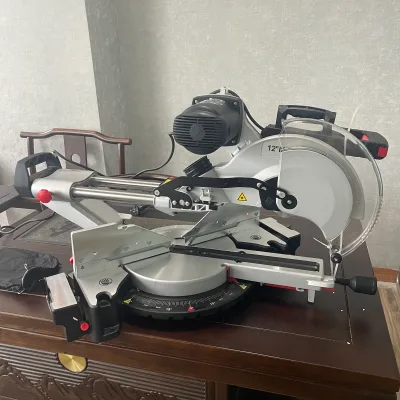
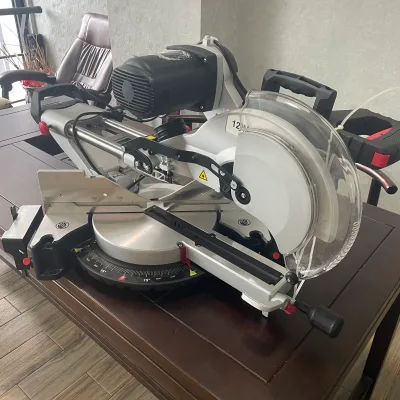


Fixtec 255mm 2200W Power Saw Miter Saw Electric Sliding Compound Miter Saw Wood Saw
$92.00 - $94.00
MOQ: 1 Pieces

Fixtec 1600W Working Saw Machine Electric Industrial Hand Sliding Miter Saw
$74.41 - $90.07
MOQ: 3 Pieces

1500W 255mm Electric Miter Saw for Aluminum & Wood Cutting (MS255-017)
$49.18 - $55.20
MOQ: 330 Pieces

Electric Power Tools Table Cutting Machine 1200W Compound Miter Saw (CMS00221)
$64.50 - $80.00
MOQ: 420 Pieces

Power Tools 1600W 250mm Electric Woodworking Cutting Saw Compound Table Miter Saw
$70.00 - $96.00
MOQ: 300 Pieces

Hot Selling 1400W 210mm Electric Miter Saw for Wood and Metal Cutting (MS210-017)
$32.50 - $36.88
MOQ: 300 Pieces

225mm Electric Compound Saw Multi-Material Cutting, 45° Bevel 1800W Miter Saw (MS255-018)
$68.50 - $83.80
MOQ: 500 Pieces


Comprehensive Sourcing Guide
Strategic Sourcing Guide for Electric Miter Saw Procurement
The global market for electric miter saws presents a diverse landscape of industrial and commercial tools designed for precision cutting. For procurement professionals, navigating this sector requires a disciplined approach that distinguishes between observed product attributes and generalized market claims. The available data indicates a significant variation in specifications, ranging from portable units to heavy-duty industrial models. Buyers must prioritize the verification of core components, power ratings, and dimensional constraints to ensure alignment with specific operational requirements. This guide outlines the critical factors for sourcing electric miter saws, focusing on technical due diligence, supplier evaluation, and long-term value assessment based on verified market observations.
Technical Specifications and Operational Parameters
Understanding the technical architecture of an Electric Miter Saw is the first step in effective procurement. The data reveals a spectrum of power sources, with electricity being the standard, operating on voltages such as 220-240V or 110V. The input power ratings vary significantly, with observed values ranging from 1650W to 2000W, and in some heavy-duty configurations, reaching 4.8kW. These variations directly impact the tool's capability to handle different materials, including wood and metal.
The duty rating is a critical specification for continuous operation. One observed model carries an S6 (40%) duty rating, indicating the machine is designed for intermittent operation with specific on-off cycles. Buyers must verify if their production lines require continuous duty ratings or if the 40% cycle suffices for their workflow. The no-load speed is another pivotal metric, with observed ranges spanning from 3800 RPM to 4600 RPM. Higher speeds generally facilitate cleaner cuts in softer materials, while lower speeds may be preferred for metal cutting to prevent blade overheating.
Blade diameter and arbor size are essential for compatibility with existing tooling ecosystems. Specifications indicate blade diameters of 255mm (approximately 10 inches) and 12 inches, with arbor sizes standardized at 1 inch. The bevel angle range is also a key differentiator; some models offer a dual-sided bevel capability of 0°-45° to the left and 0°-45° to the right, providing greater flexibility for complex joinery. Procurement teams should ensure that the selected model's physical dimensions, such as the 520540980mm footprint, fit within the designated workspace.
Compliance, Certification, and Safety Standards
While the product data confirms the availability of machinery test reports and specific model standards like MS1600 and MS1800B, buyers must exercise caution regarding broader compliance claims. The presence of a "machinery test report: Provided" attribute suggests that suppliers are willing to share documentation, but the specific content of these reports must be reviewed by the buyer's safety team.
Certification status is not explicitly detailed in the provided facts, meaning buyers cannot assume compliance with international safety standards such as CE, UL, or ISO without direct verification. The "prod_standard" field lists model-specific identifiers (e.g., MS1600, MS1800B) rather than universal safety certifications. Consequently, procurement protocols must include a mandatory request for third-party safety certification documents before finalizing any order.
Furthermore, the core components, identified as the motor and "Other," should be scrutinized for origin and quality. The motor is the heart of the machine, and its construction quality directly influences longevity and safety. Buyers should verify that the motor specifications align with the intended voltage and frequency (50-60Hz) of their local grid to prevent operational failures or safety hazards.
Cost Drivers and Pricing Dynamics
The pricing structure for electric miter saws is influenced by a complex interplay of factors, including power output, build quality, and customization options. The observed price range in the market spans from $23.57 to $209.07 USD. This wide disparity suggests that the market includes both entry-level portable units and more robust, feature-rich industrial models.
Key cost drivers include the input power rating and the complexity of the mechanical design. Models with higher wattage (e.g., 2000W or 4.8kW) and advanced features like dual bevel capabilities naturally command higher prices. Additionally, the "Customization: Available" and "Customized" attributes indicate that bespoke configurations can increase costs. Buyers seeking specific branding, color schemes, or packaging modifications should anticipate a premium over standard off-the-shelf units.
The Minimum Order Quantity (MOQ) also plays a significant role in the total cost of ownership. The observed MOQ range is 1 to 500 units. Small buyers may access single-item purchases, while larger enterprises might leverage bulk ordering to negotiate better unit economics. However, the "Selling Units: Single item" attribute suggests flexibility for smaller orders, which is beneficial for pilot testing or small-scale workshops.
Typical Applications and Material Compatibility
The versatility of electric miter saws is evident in their diverse application profiles. The data explicitly lists applications for both "Wood Saw" and "Metal Saw," indicating that the market offers tools capable of handling multiple material types. However, the specific configuration of the saw determines its suitability for a given task.
For woodworking applications, the high no-load speeds (up to 4600 RPM) and larger blade diameters (12 inches) are advantageous for achieving smooth, precise cuts in lumber and engineered wood products. The "Easy To Operate" selling point highlights the importance of user-friendly interfaces for woodworkers who may require rapid setup and adjustment.
Conversely, for metal cutting applications, the saw must be equipped with appropriate blades and potentially lower speed settings to manage the heat generated during the cutting process. The "Use: Metal Cutting" attribute confirms that specific models are engineered for this purpose. Buyers must ensure that the selected saw's motor and structural integrity can withstand the rigors of metal cutting, which often involves higher resistance and different vibration profiles compared to wood cutting.
Supplier Evaluation and Geographic Considerations
Supplier selection is a critical component of the sourcing strategy. The data indicates that manufacturers are located in various regions of China, including Zhejiang Province, Henan, and Shanghai. These regions are known for their manufacturing clusters, but the specific location can influence logistics, lead times, and communication efficiency.
When evaluating suppliers, buyers should prioritize those who provide comprehensive documentation, including machinery test reports and detailed specifications. The "Provide The Spare Parts: Yes" attribute is a strong indicator of a supplier's commitment to after-sales support. A supplier that readily offers spare parts demonstrates confidence in their product's longevity and a willingness to support the buyer's operational continuity.
The "brand name: ly" observed in the data suggests that some suppliers may operate under specific brand identities, while others may offer OEM services. Buyers should clarify whether the product will be sold under their own brand or the supplier's brand, as this impacts marketing and customer perception. Additionally, the "Condition: New" attribute confirms that the market primarily deals in new equipment, reducing the risk associated with refurbished or used machinery.
Quality Control and Long-Term Procurement
Quality control must be integrated into the procurement process from the initial inquiry stage. The availability of "machinery test reports" provides a baseline for quality assurance, but buyers should consider conducting independent inspections or requesting third-party verification for high-volume orders. The "Warranty: 1 Year" standard observed in the market offers a baseline for post-purchase support, but buyers should negotiate terms that align with their specific risk tolerance and operational criticality.
Long-term procurement considerations extend beyond the initial purchase price. The "Duty Rating" and "Power Source" specifications are critical for predicting maintenance schedules and energy consumption. Models with higher duty ratings may require less frequent downtime, translating to higher overall productivity. Similarly, the "Input Power" rating affects electricity costs, which can be a significant factor in large-scale operations.
Packaging is another aspect of quality control that impacts logistics. The data shows variations in packaging, ranging from "Color Box" to "Carton." Proper packaging ensures that the saw arrives in pristine condition, minimizing the risk of damage during transit. Buyers should verify that the packaging size and weight (e.g., N.W./G.W.: 11/13.5kgs) align with their shipping constraints and storage capabilities.
Comparative Analysis of Key Models
To facilitate decision-making, the following table summarizes the key specifications observed in the market for electric miter saws. This comparison highlights the diversity in power, speed, and application, aiding buyers in selecting the most appropriate model for their needs.
| Feature | Model A (MS1600) | Model B (MS1800B) | Model C (MS2000) | Model D (HY9255B) |
|---|---|---|---|---|
| Saw Type | Miter Saw | Miter Saw | Circular Saw | Circular Saw |
| Application | Wood Saw | Wood Saw | Wood/Metal Saw | Wood/Metal Saw |
| Input Power | Not Specified | 2000W | 2000W | 1650W |
| No-Load Speed | Not Specified | 3800 RPM | Not Specified | 4600 RPM |
| Blade Diameter | Not Specified | Not Specified | 255mm | 10", 12" |
| Voltage | Not Specified | 220-240V | 220V or 110V | Not Specified |
| Weight | Not Specified | Not Specified | 23 kg | Not Specified |
| Origin | Zhejiang, China | Zhejiang, China | Zhejiang Province | Shanghai, China |
| Warranty | Not Specified | 1 Year | 1 Year | Not Specified |
This table underscores the importance of matching specific technical requirements to the correct model. For instance, if a buyer requires a dual-voltage option, Model C is the only choice among the listed specifications. Similarly, if high speed is a priority for wood cutting, Model D offers the highest observed no-load speed.
Conclusion
Sourcing electric miter saws requires a meticulous approach that balances technical specifications, compliance requirements, and cost considerations. The market offers a wide array of options, from portable units to heavy-duty industrial machines, each with unique attributes. By focusing on verified data points such as power ratings, duty cycles, and warranty terms, buyers can make informed decisions that align with their operational goals. The availability of customization, spare parts, and test reports further enhances the value proposition of these tools. Ultimately, successful procurement hinges on thorough due diligence, clear communication with suppliers, and a commitment to quality assurance throughout the supply chain.
FAQs
What power sources and voltages are available for electric miter saws?
Electric miter saws operate on electricity with voltages of 220-240V or 110V. Input power ratings vary from 1650W to 2000W, with some heavy-duty models reaching 4.8kW to handle different cutting tasks effectively.
Which blade diameters and speeds are common for these tools?
Common blade diameters include 255mm and 12 inches with a 1-inch arbor size. No-load speeds typically range from 3800 RPM to 4600 RPM, allowing for precise cuts in wood or metal depending on the specific model configuration.
Can I find electric miter saws with customization options?
Yes, customization is available for many Electric Miter Saw models. Buyers can request specific branding, packaging, or functional modifications, though these bespoke configurations may influence the final unit price and minimum order quantity requirements.
What warranty and spare parts support do suppliers provide?
Most suppliers offer a standard one-year warranty and confirm the availability of spare parts. This support ensures operational continuity, allowing buyers to maintain their equipment efficiently without needing to replace the entire unit immediately.
How do duty ratings affect continuous operation capabilities?
Duty ratings indicate the machine's operational cycle, with some models rated at S6 (40%). This means the tool is designed for intermittent use, so buyers must verify if this cycle matches their specific production line requirements.
Which locations manufacture these electric miter saws?
Manufacturers are primarily located in Zhejiang Province, Henan, and Shanghai in China. These regions host established manufacturing clusters, though buyers should verify specific factory locations to align with logistics and lead time expectations.